

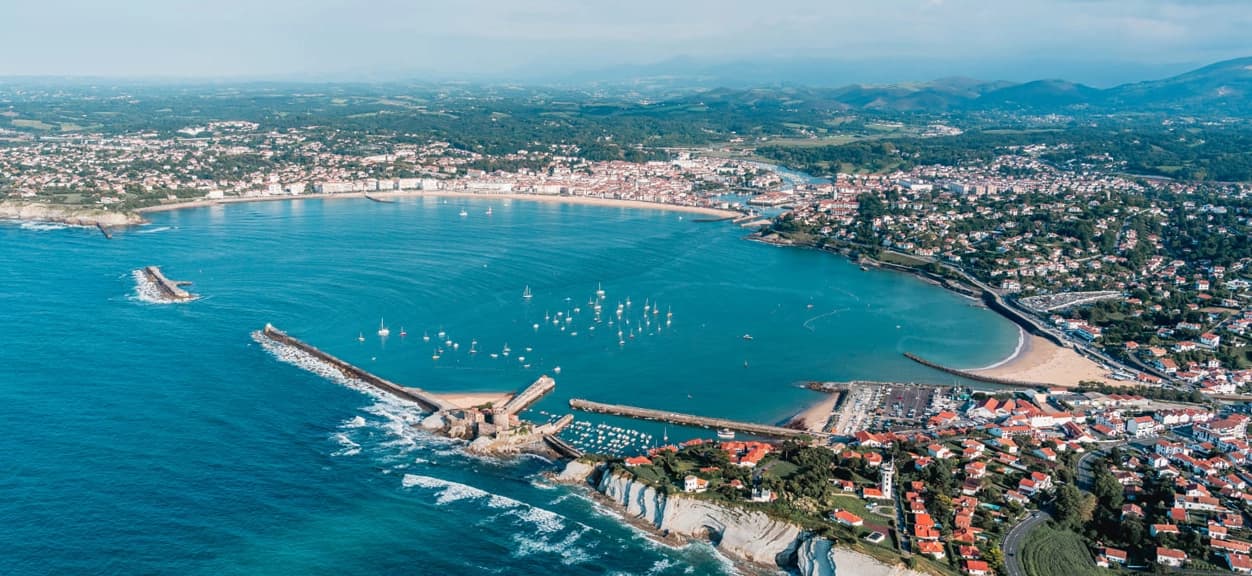
In the Basque Country, between Biarritz, Bayonne and Saint-Jean-de-Luz, the restaurant scene is dense, lively and highly competitive, with both a local and a tourist clientele. Many restaurants rely on social media or review platforms but neglect their own website.
Yet it is often the website that turns a simple Google search into a booking. Here is what a restaurant website must offer to attract customers, and the most common mistakes that send them elsewhere.
The menu accessible in one click
It's the first instinct of a hesitating customer: check the menu. If your menu is hard to find, unreadable on a phone or hidden in a heavy PDF download, you lose the visitor within seconds.
The menu should display directly on the site, clearly, and stay up to date (specials, closures, set menus). A mobile-readable menu is now non-negotiable: the vast majority of restaurant searches happen on a smartphone.
Simple, immediate booking
Once convinced, the customer wants to book effortlessly. Offer online booking or, at the very least, a direct call button that launches the call with a single tap on mobile.
Booking directly from your site has a major advantage: it avoids the commissions charged by platforms. Every booking made through your own site means a preserved margin and a customer you keep in a direct relationship.
The essential information, right away
Opening hours, address, phone number, access and parking: this information must be immediately visible and always accurate. A wrong opening time or an unannounced closure means an unhappy customer — and often a negative review.
In the Basque Country, where part of the clientele is passing through, these practical details are decisive. A tourist who can't find your hours will simply go to the restaurant next door.
Beautiful photos that make people want to come
Food sells first through images. Carefully taken photos of your dishes, your dining room and the atmosphere reassure customers and trigger the desire to visit.
No need to overdo it: a few quality visuals, bright and representative of your establishment, are worth more than an overloaded gallery. Basque gastronomy has a real identity — show it off.
Being visible on Google and Google Maps
When someone searches for 'restaurant in Bayonne' or 'where to eat in Biarritz', everything happens on Google and Google Maps. A well-structured site, paired with a complete Google Business profile, helps you appear in these local results.
Reviews also play a key role: a site that links to your reviews and an up-to-date profile builds trust. This is often what tips the decision between two establishments.
Capturing the tourist and multilingual clientele
The Basque Country attracts French, Spanish and international visitors. A site offering several languages (French, Spanish, English) clearly widens your audience, especially on the coast and near the border.
A visitor from San Sebastián, Spain or elsewhere who can read your menu in their language will feel welcome before even arriving. It's a concrete advantage over establishments that stay monolingual.
The mistakes that drive customers away
A few flaws are enough to lose a booking: a slow site, poorly suited to mobile, a menu that can't be found or shown as an unreadable photo, wrong hours, no easy way to book or call.
Conversely, a fast, clear and up-to-date site works for you around the clock. It reassures, informs and converts, even when your restaurant is closed. That's precisely what separates a site that merely decorates from one that fills the dining room.
Frequently asked questions
Does a restaurant really need a website?
Yes. It's where customers check the menu, the hours and whether they can book. Social media isn't enough for this information, and platforms charge commissions. A proper site makes you independent and credible.
Should I offer online booking?
If possible, yes: it's the most convenient for the customer. At a minimum, provide a direct call button on mobile. Booking directly from your site also avoids platform commissions.
Does a website replace platforms like TheFork?
It complements them rather than replacing them. But a site with direct booking reduces your dependence on these platforms and the associated commissions, while keeping the customer relationship on your side.
Do I need a multilingual website for a restaurant in the Basque Country?
It's strongly recommended. The clientele is partly touristic and cross-border. A site in French, Spanish and English widens your audience, especially on the coast and near the Spanish border.
How much does a restaurant website cost?
A well-designed restaurant showcase site generally ranges between €1,500 and €3,000, depending on the features (online booking, multilingual, photo gallery). The budget mainly depends on the level of customisation.